aerops airport FLIGHT LOG

Digital main flight log for airfields and airports

All data from flight log entries is fed into the main flight log, where it serves as the central basis for performance allocation, fee calculation, billing, analyses, and regulatory reporting.

Document all flight movements centrally and in a traceable manner

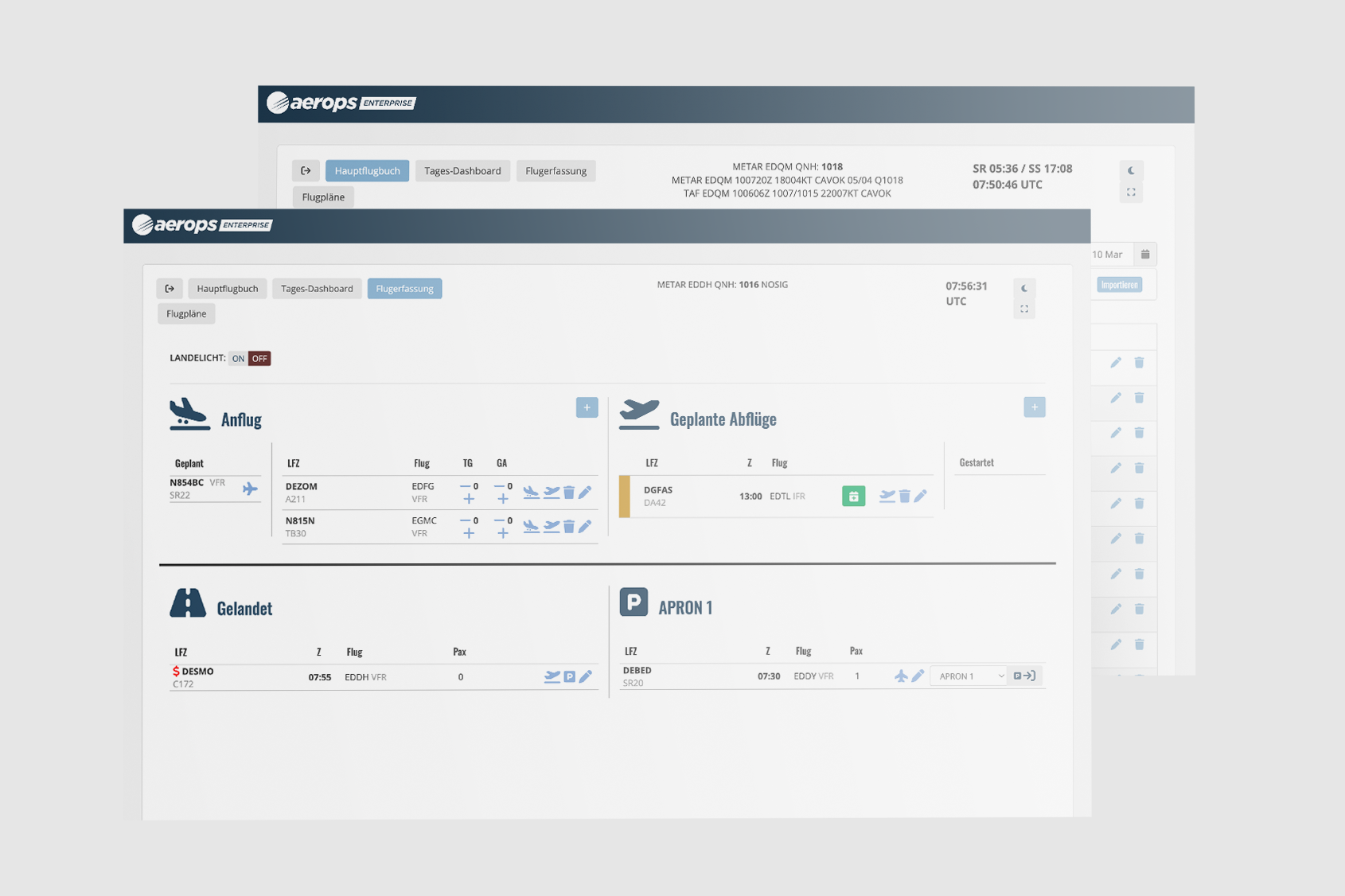
Takeoffs, landings, touch-and-goes, training flights, and special flights are consolidated into a central digital master flight log. This ensures that air traffic control, operations, and administration are always working with the same up-to-date data.

Every movement remains traceable and can be linked to the aircraft, customer, flight type, fees, and other services. Operational flight logging and the master flight log are directly integrated with one another.

Automatically Complete Flight Movements

aerops automatically supplements data records with available aircraft and flight information. This includes ICAO type, stored callsigns or trip numbers, as well as origin and destination from flight plans, PPR information, ADS-B, and network data.

  • Import Scheduled Arrivals and Departures Early
  • Record Runway Direction, Routes, NAV, and Approach Procedures
  • Use Custom Fields for Rules and Billing
     

Learn more about the automatic recording of flight movements.

Integrating Existing Systems and Data Sources

Flight movements can be imported from Excel files, data exports, and monitored FTP directories, or transferred directly via a REST API. Club, association, and third-party systems can also import complete movement data sets.

One example is the integration of Aircraft Info Desk with aerops. Additional movement data can be imported from sources such as the JETVISION network.

From Flight Logging Directly to Service Billing

All data from route-based flight logging is fully integrated into the digital master flight log. This creates a centralized and traceable data foundation for the allocation and billing of all services.

Recorded or imported flight movements are available for further processing without the need for duplicate data entry. Customers and aircraft are assigned, fee rules are applied, and additional services are transferred for later invoicing.

Discounts, special services, and customer-specific rules can be managed via freely configurable fields. This ensures a seamless process from data entry in the route-based system through the main flight log to service billing.

Early Detection of Duplicates, Gaps, and Incomplete Data Records

Dashboards and validity checks highlight unusual activity. Duplicate takeoffs or landings, missing return flights, and incomplete data can be specifically checked before billing and statistical analysis.

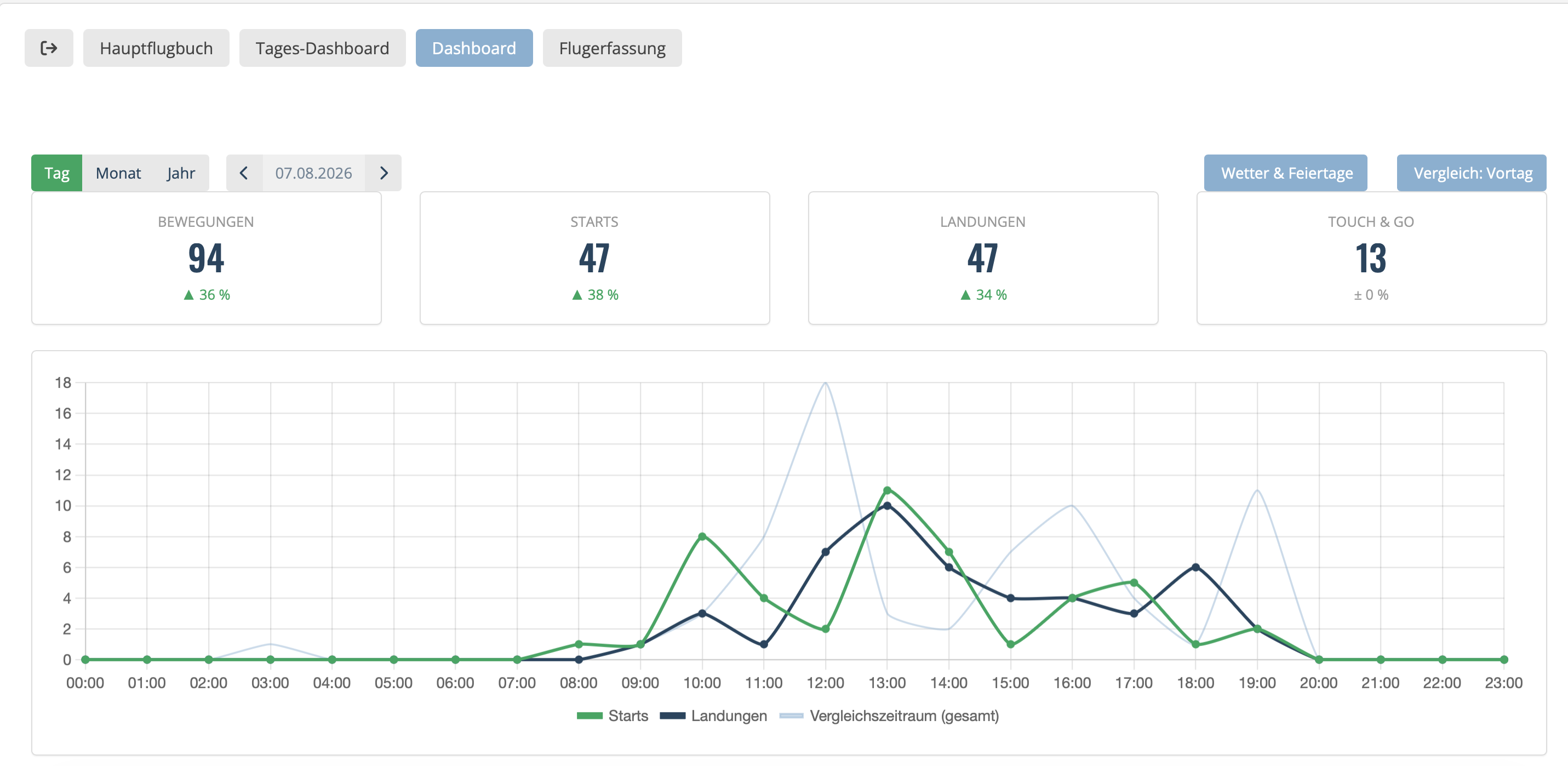
Analyses show, among other things, top aircraft, frequent destinations, key customers, daily and hourly trends, and comparative figures. Trends and forecasts support operational planning for the coming days.

Official statistics, reports, and exports at the click of a button

The main flight log serves as the common data source for internal analyses and required reports. Exports and reports can be prepared for statistical agencies, aviation and federal authorities, border police, and other authorized entities.

Raw data is available as an Excel export or via an interface. Custom reports can be tailored to the specific requirements of each airport.

The solution is suitable for commercial and general aviation airports, regional airports, flight schools, FBOs, and business aviation—even in conjunction with unmanned operations concepts.

Contact